

Journal / Culture
Löyly and Aufguss: the water on the stones
Two words for the same ladle of water, and the two traditions built around it.
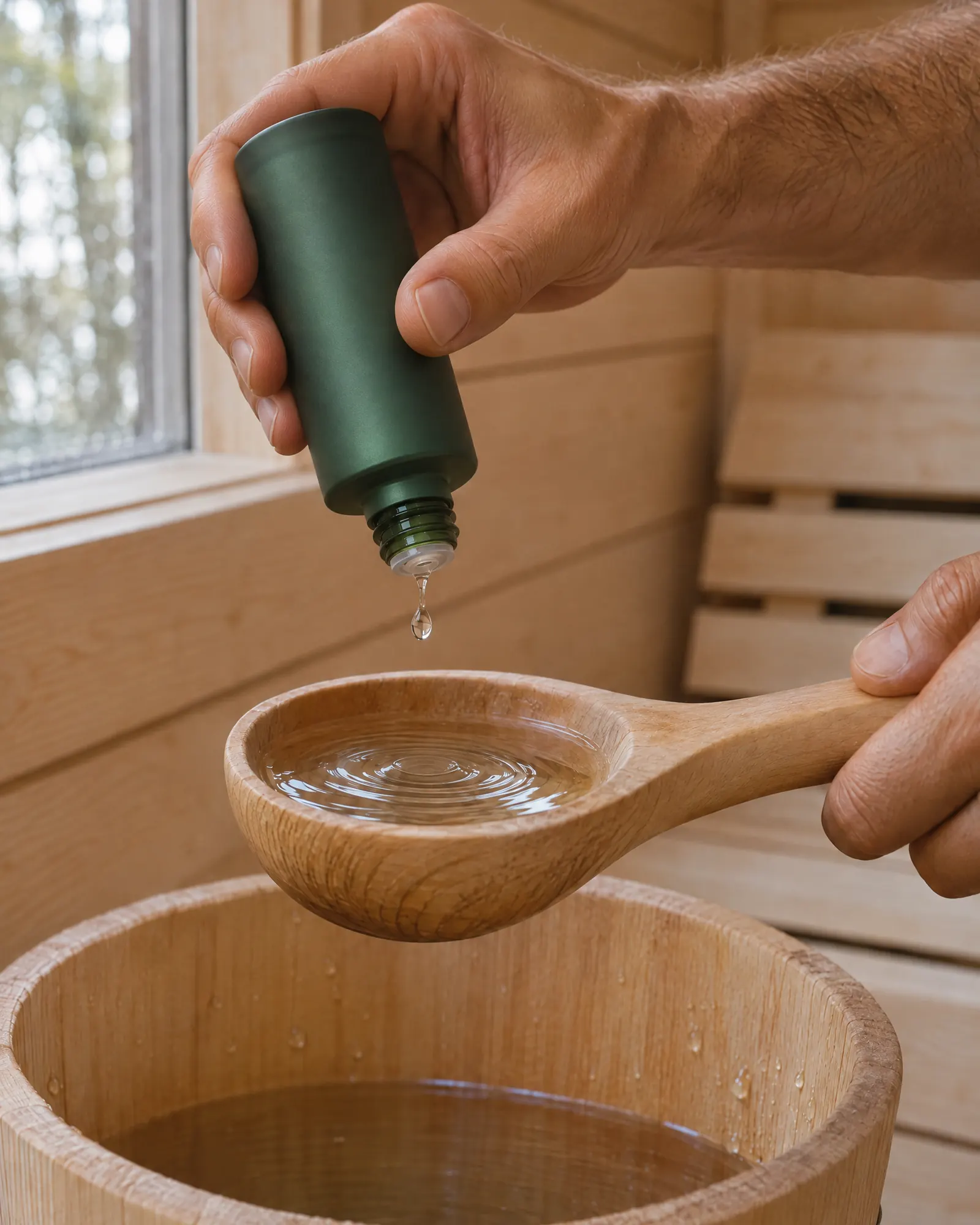
The single most important thing that happens in a sauna takes three seconds. Someone lifts a ladle, water lands on hot stones, and the room changes.
Löyly
In Finland the steam has a name of its own: löyly. UNESCO, which added Finnish sauna culture to its list of intangible cultural heritage in 2020, describes löyly as the heart of the experience. The same listing gives a sense of scale: about 3.3 million saunas in a country of 5.5 million people.
Physically, the water turns to steam and briefly raises both the temperature you feel and the humidity. In a Finnish sauna anyone may pour. Good manners are to ask the others first.
Aufguss
The German word means infusion, and it describes the same act: water onto hot stones. In Germany that simple act grew into a ceremony. A sauna master pours the water, often scented, and then moves the hot air through the room so that it reaches everyone.
So the difference is less in the water than in who holds the ladle. In a Finnish sauna it is whoever sits nearest the bucket. At a German Aufguss it is the person leading the session, and the room waits for them.
Doing it at home
- Check your heater
Water belongs only on a heater with stones that is built to take it. An infrared cabin has no stones.
- Scent goes into the water
A few drops of an infusion, or two to four menthol crystals, dissolved in the ladle or the bucket. A concentrate poured straight on a hot heater can scorch or catch.
- Pour slowly
One ladle over the stones, not onto the element. Wait and feel what it does before the next.
- Ask first
In company, ask before you pour and before you add scent. Start with little.
A word on scent and safety
Germany's Federal Institute for Risk Assessment notes that essential oils are not harmless simply because they are natural. Substances such as menthol, camphor and eucalyptus oil are unsuitable around infants and young children, and people with asthma or allergies should be careful. Use little, keep the bottle out of the hot room, and keep it away from children.
Sources (5)
From the range
What this article is about
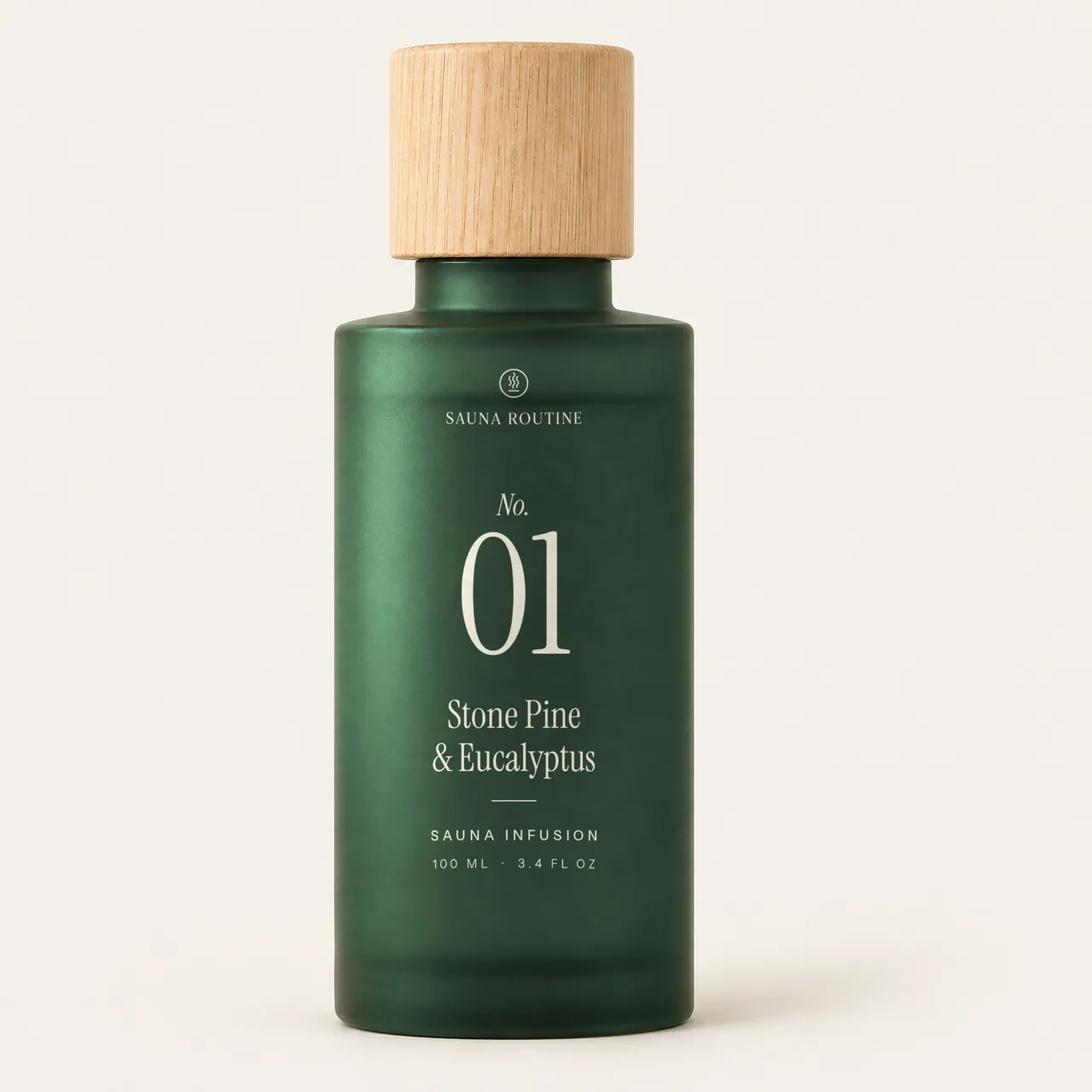
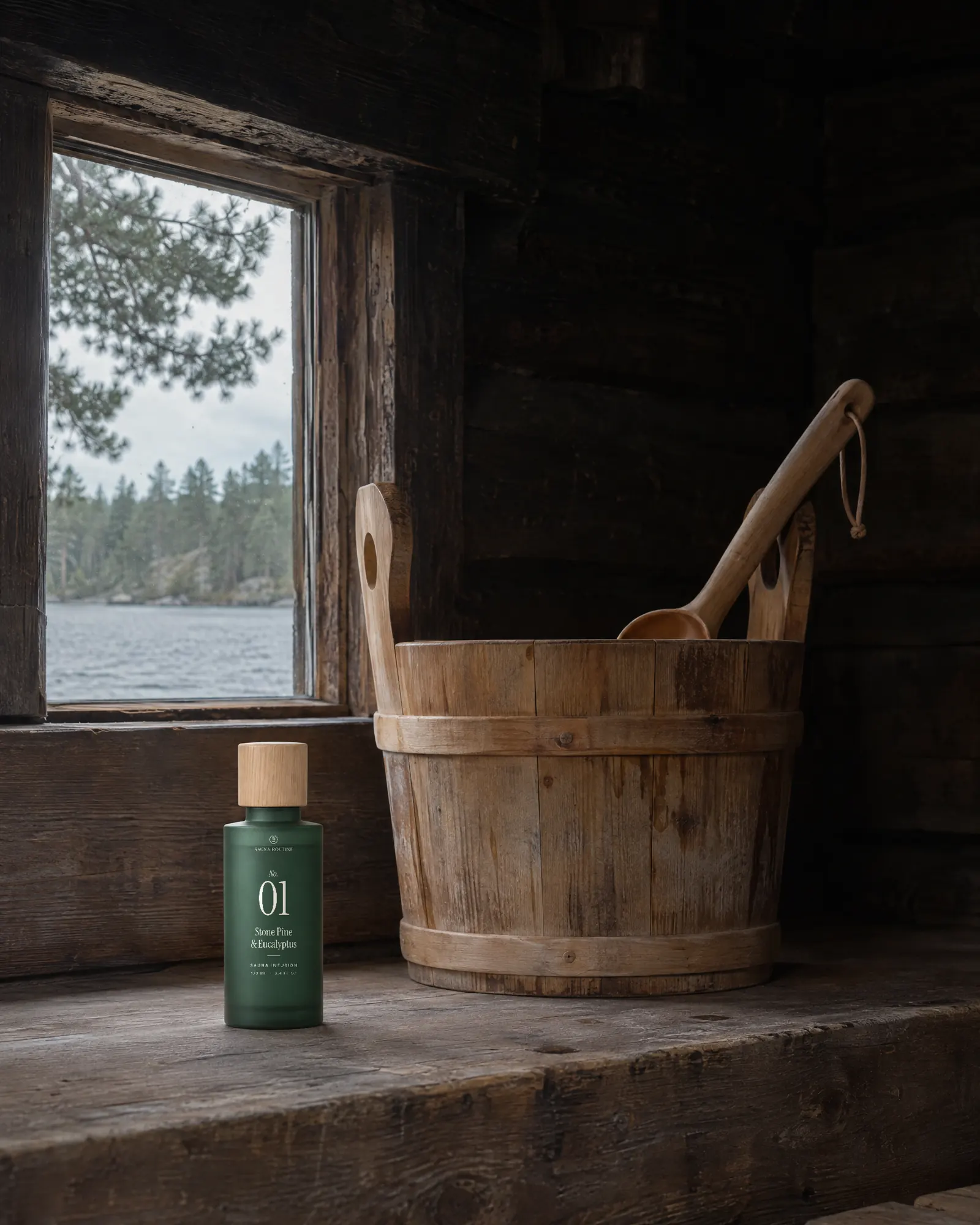 Sauna Infusion No. 01
Stone Pine & Eucalyptus. Resinous, woody, clear.
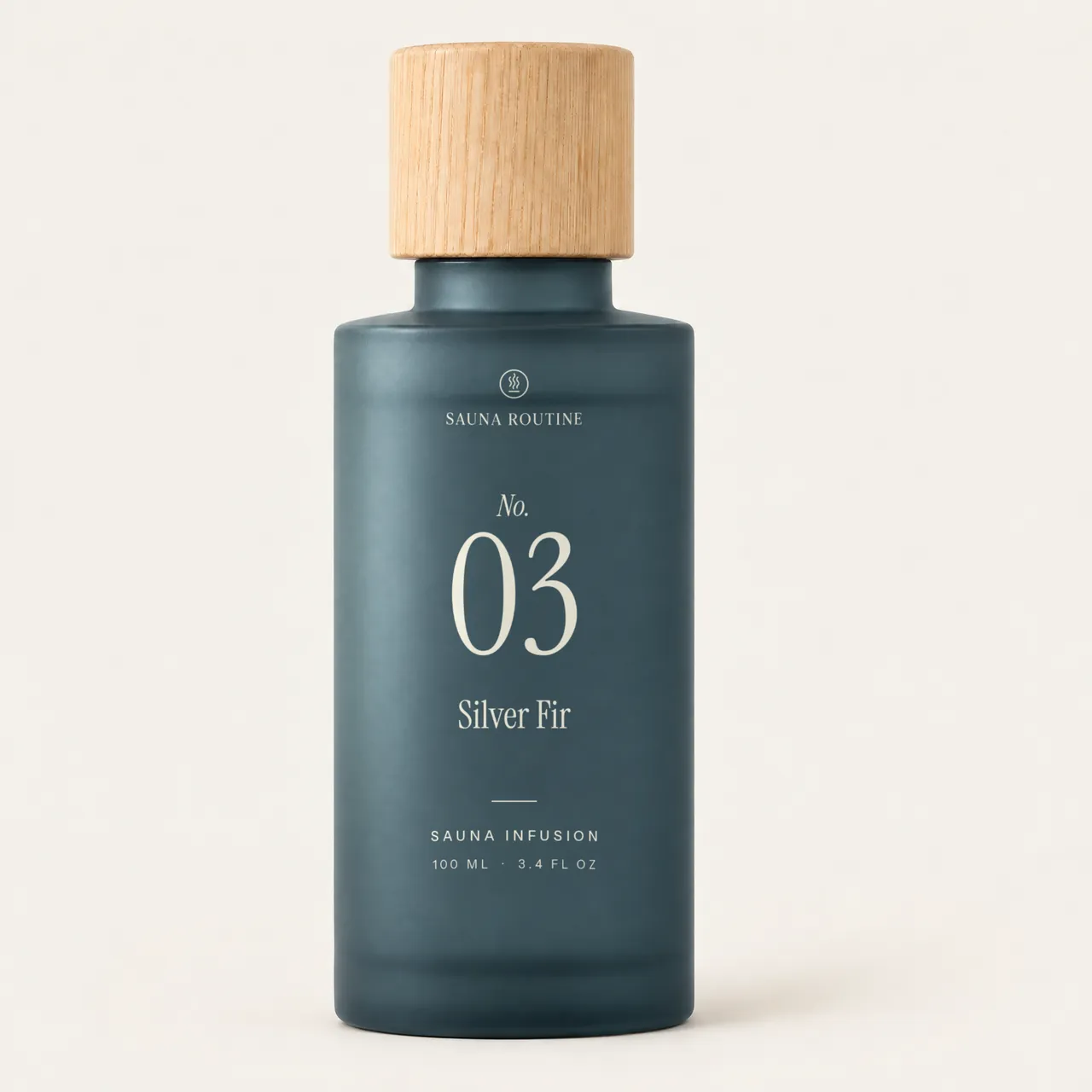
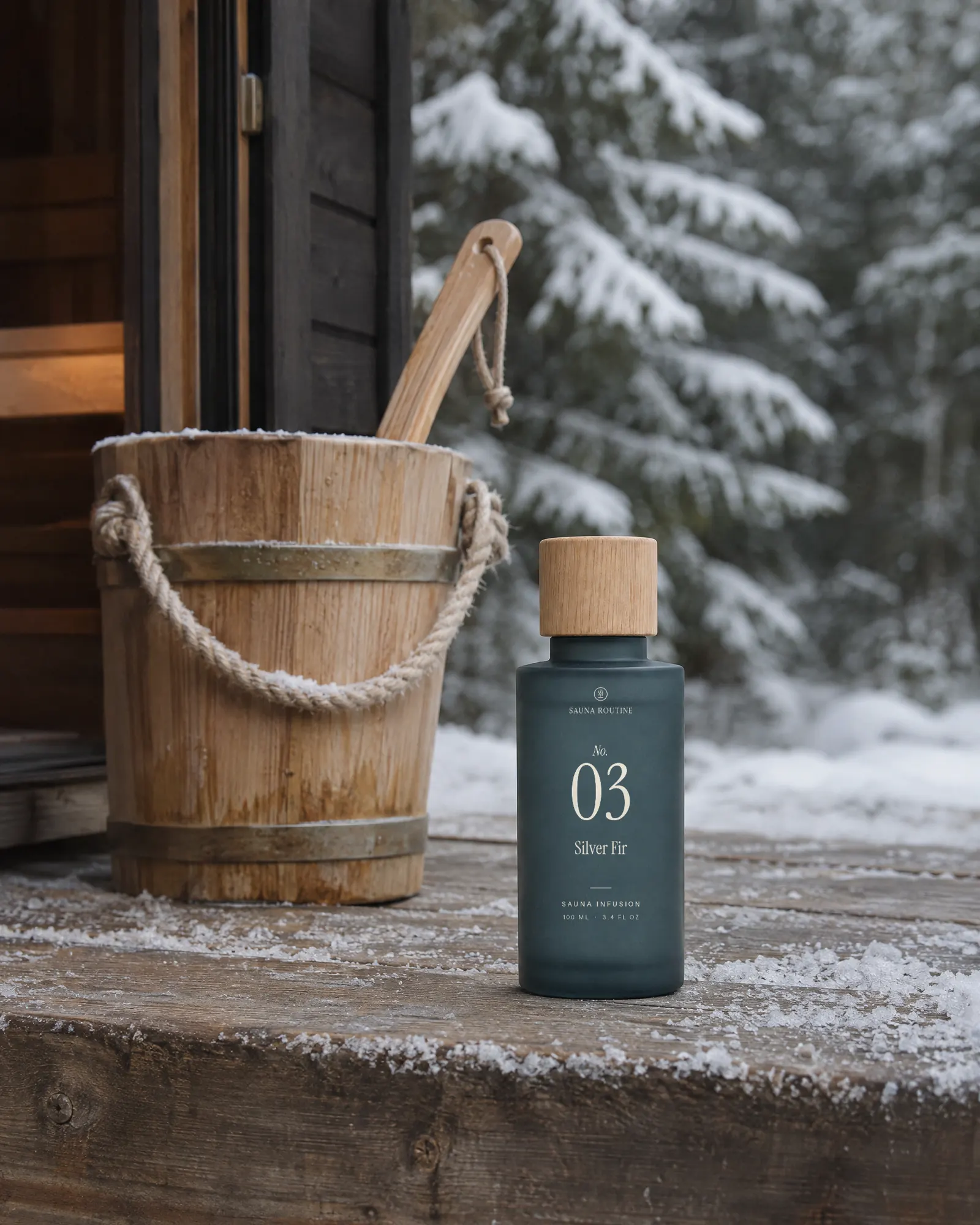 Sauna Infusion No. 03
Silver Fir. Clear, woody, cool.
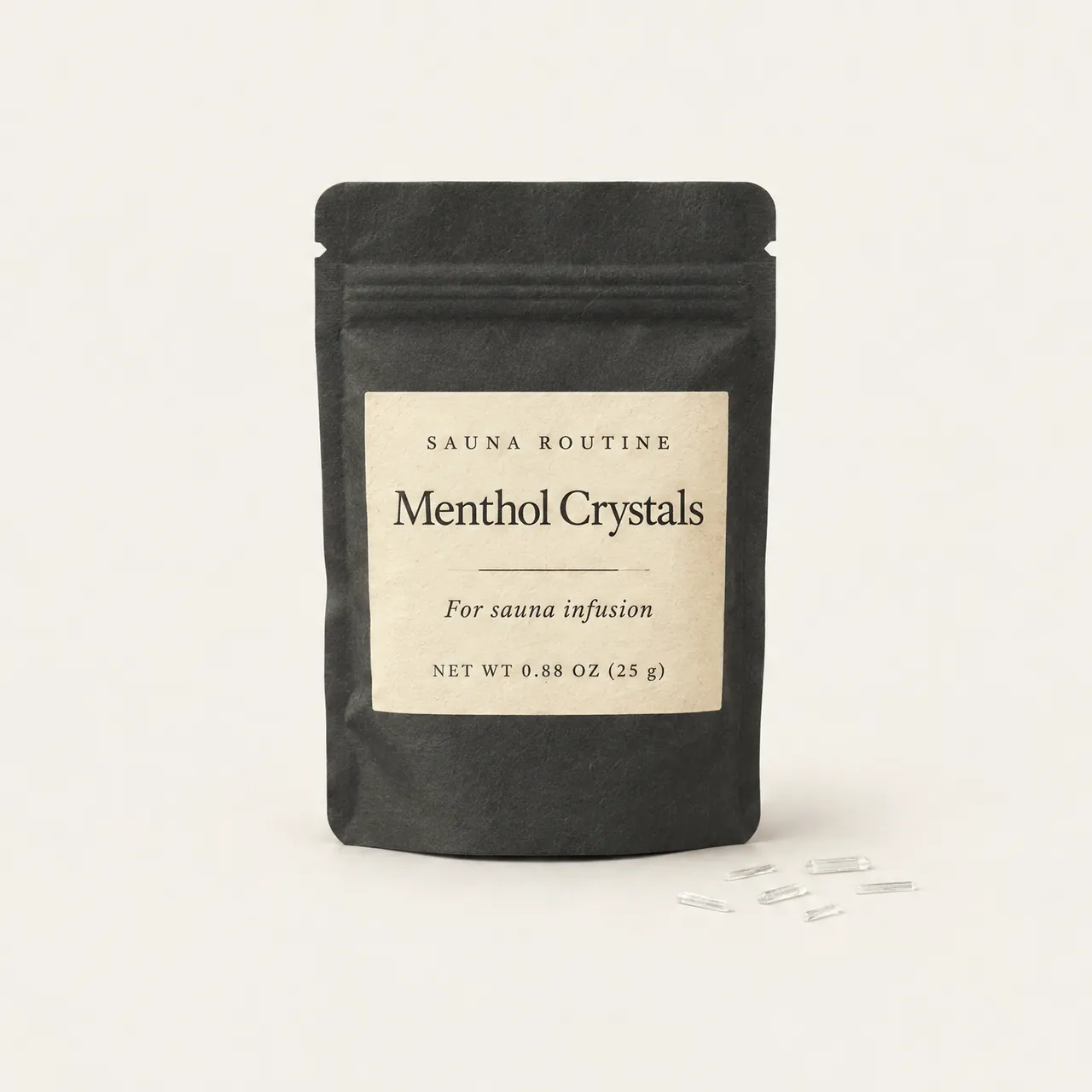
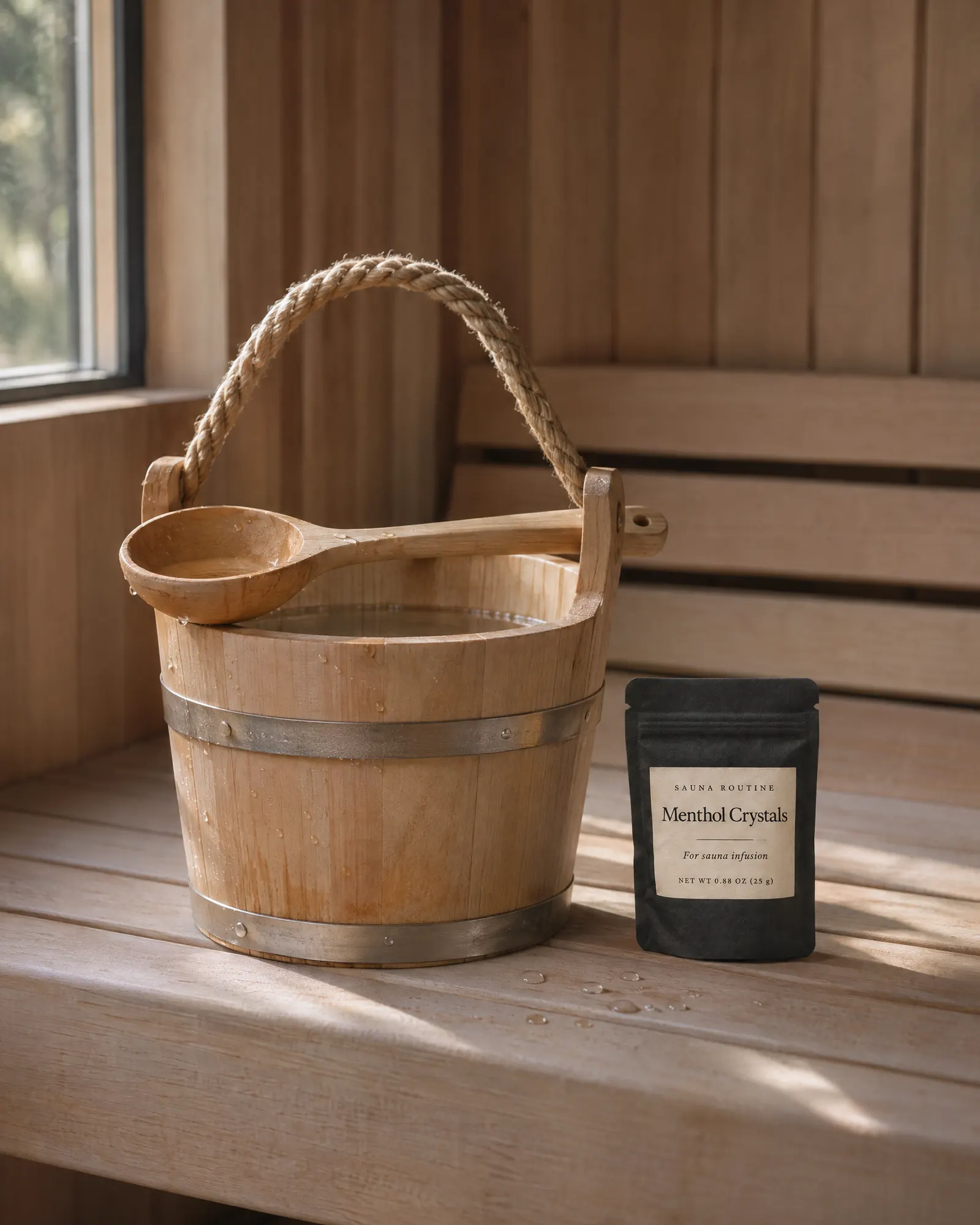 Menthol Crystals
Two to four crystals in the water. The steam feels cool to breathe.
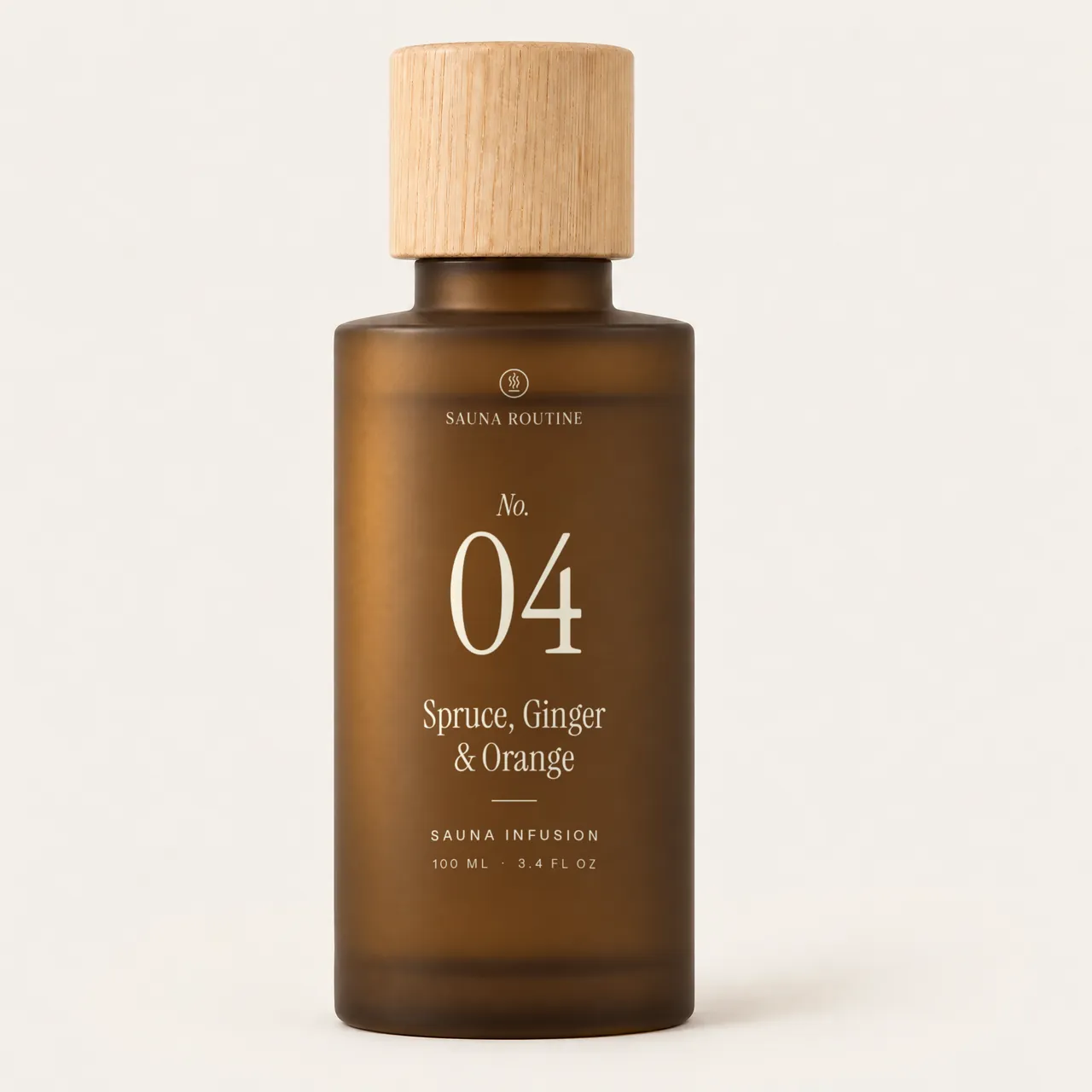
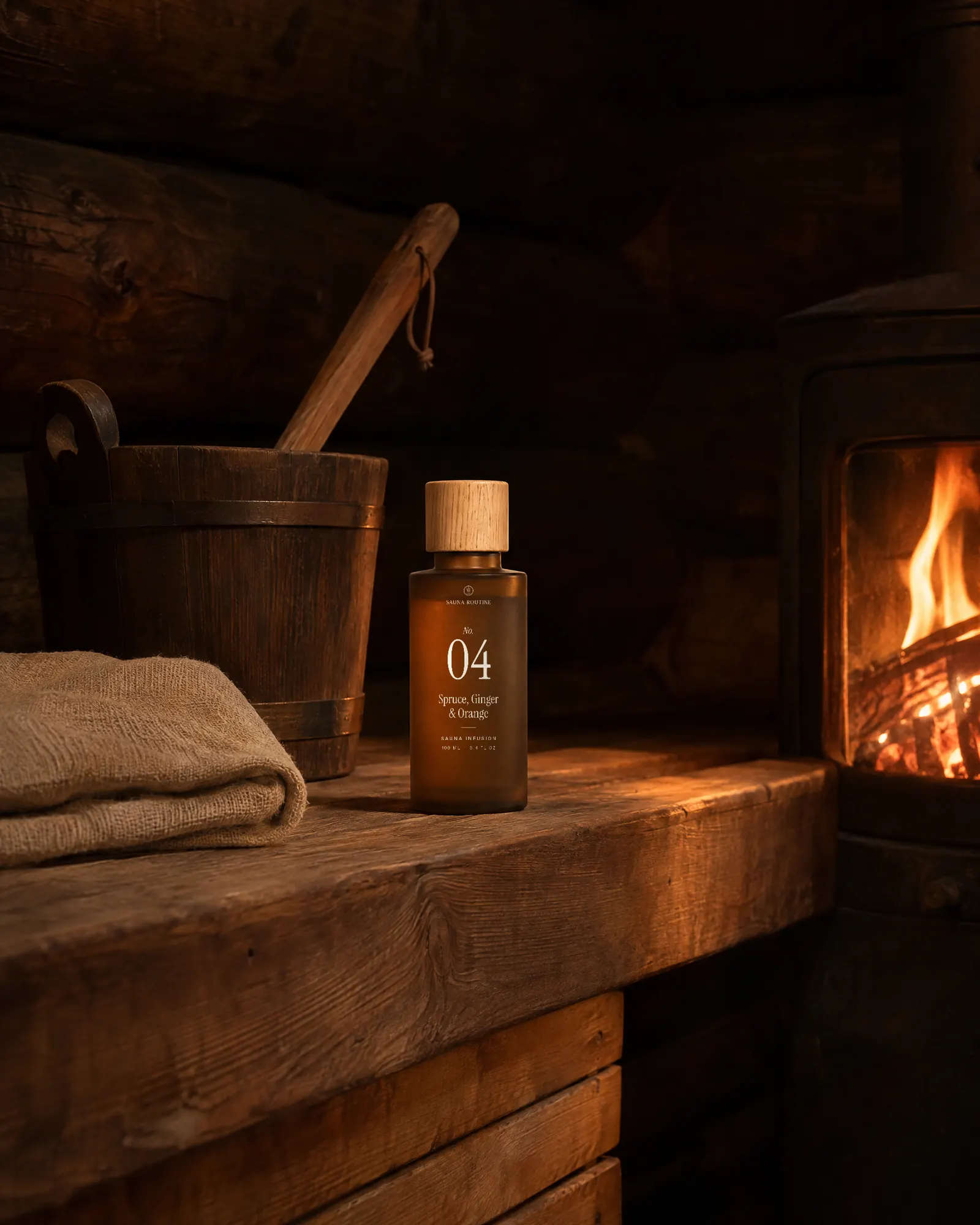 Sauna Infusion No. 04
Spruce, Ginger & Orange. Resinous, spicy, warm.
Read next
Why people wear a hat in the sauna